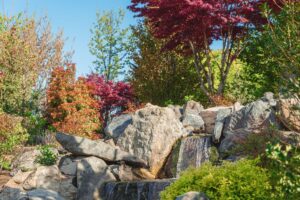

Choose a pond if you want a living ecosystem with koi, aquatic plants, and a visible pool of water. Choose a pondless water feature if you mainly want the sound and movement of water in a smaller, lower-maintenance footprint. In Utah’s dry climate, both work well when they use recirculating pumps, solid filtration, and smart placement, so the right pick comes down to your space, comfort with maintenance, and whether you want fish.
A water feature is a backyard upgrade you hear about before you see it. The sound of moving water on a summer evening draws homeowners in. The real question is what form it should take: a full pond you can stock with koi and lilies, or a pondless feature that gives you the same sound without an open pool to maintain.
The two options differ in upkeep, safety, cost, and how they fit a Utah yard. This guide breaks down each one to help you match a backyard water feature to your property and routine.
What is a pond?
A pond is a deeper basin of standing water, usually 2 to 4 feet deep, that holds a visible pool and supports a small living ecosystem. Well-designed yard ponds and waterfalls let you keep koi and aquatic plants, and provide a centerpiece that changes with the seasons.
A pond rewards homeowners who enjoy tending the water, but that living quality asks more in upkeep and cost.

What is a pondless water feature?
A pondless feature is a waterfall, stream, or bubbling rock that recirculates water into a hidden underground reservoir instead of a visible pool. You get the sound and movement of water with little or no standing water, and it tucks into spots a pond cannot: narrow side yards, front entries, and tight corners.
The tradeoff is the pool itself. You give up koi, lilies, and a reflective surface, but you gain simplicity. For a busy household that wants the calm of running water without the daily work, a pondless feature usually wins.
Pond vs. pondless at a glance
| Factor | Pond | Pondless water feature |
| Standing water | Visible pool, 2 to 4 feet deep | No visible pool; hidden reservoir |
| Fish and aquatic plants | Yes | No |
| Maintenance | More upkeep: clean filters, manage algae, tend fish, and clear mineral scale | Less upkeep; rinse the reservoir and pump, and clear mineral scale |
| Space needed | Medium to large yards | Fits small and tight spaces |
| Safety with young kids | Open water needs precautions | No deep pool to supervise |
| Winter care | De-icer or aerator to protect fish | Drains and shuts down easily |
What each option costs
Price is often the deciding factor. The figures below are national 2026 planning estimates from industry cost guides such as Angi and HomeGuide; your quote depends on size, materials, site access, and distance to power and water.
| Option | Typical professional install (2026) | Annual upkeep |
| Pondless feature | $4,000 to $14,000 (more for large custom streams) | $250 to $2,700 |
| Pond | $3,000 to $15,000 ($12,000 to $30,000+ for large koi ponds) | $400 to $2,900 |
A few things shape the cost:
- Size and stream length. A short, simple feature sits at the low end; long streams, multiple drops, and natural boulder work push the price higher.
- Fish and filtration. A koi pond needs biological filtration and more depth, which is the main reason ponds cost more and need more upkeep.
- Materials and site. Natural stone, lighting, and difficult digging all add to the total.
Outdoor water features may also return an estimated 20% to 50% of their cost in added property value.
What Utah’s climate means for your water feature
Utah’s high-desert climate and hard water shape how a feature behaves day to day. A few local factors are worth planning around.
Water use and drought
Ponds and pondless systems recirculate the same water, so once filled, the main loss is evaporation and a little splash that you top off now and then. Over a season, a recirculating feature often uses less water than irrigating the lawn it replaces. A pondless feature has the edge, since its covered, underground reservoir loses less to the sun, wind, and dry air.
Hard water and mineral deposits
Utah’s hard water leaves white scale on rock, spillways, and pumps. Evaporation leaves those minerals behind as you top off, so buildup collects over time on any type of water feature. Plan on periodic cleaning to keep surfaces and equipment clear, plus closer attention to water chemistry in a fish pond.
Sun and algae
Intense high-altitude sun feeds algae in open ponds, so placement, some shade, and good filtration matter more here than in cloudier regions. A pondless feature gives algae far less standing water to take hold in.
Watering rules
Restrictions vary by city and by year. Recirculating features generally aren’t treated like lawn irrigation, but check your local district before you build.
Winter
A pond with fish needs care, such as enough depth for koi to go dormant, a de-icer or aerator to keep a hole open in the winter ice so gases escape, no feeding once the water drops below about 50 degrees, and fall leaf cleanup.
A pondless feature asks far less, since the insulated reservoir is below ground. You can drain the plumbing and shut it down in an afternoon. Freeze-thaw is the biggest risk for either feature, which is why solid installation, grading, liners, and protected plumbing matter.
Which one fits your yard
Larger, open lots show off full-yard ponds and waterfalls, while smaller or sloped yards favor a pondless stream or a bubbling rock. Match yourself to the closest profile:
- Choose a pondless water feature if you have a small or sloped lot, young kids or pets, a tighter budget, or you simply want the sound of water without weekend upkeep.
- Choose a pond if you have the space, want koi and aquatic plants, like tending a living centerpiece, and don’t mind the added care and cost.
- Consider a layered design if you want a visible pool as a focal point while keeping some of the low-maintenance and water-saving benefits of a pondless basin.

Frequently asked questions
How much does a pondless waterfall cost?
Most professionally installed pondless features run about $4,000 to $14,000 in 2026, with larger custom streams costing more. A do-it-yourself kit can run $400 to $4,000, but you take on the digging and the risk of installation mistakes.
Can I have fish in a pondless feature?
No. Pondless systems lack a deep, stable body of water, so they can’t reliably support fish or most aquatic plants. If you want koi or goldfish, you need a true pond.
Are ponds safe for kids and pets?
Many families enjoy ponds safely, but any open water calls for supervision and may need fencing or shallow shelves. A pondless design with no deep pool is the safer option for unsupervised play.
Can I convert an existing pond to a pondless feature?
Yes. Many owners fill an older basin with rock and add an underground reservoir and pump, keeping the look and sound of the falls while cutting maintenance.
Plan your backyard water feature with LaytonScape
A pond gives you a living centerpiece to tend; a pondless feature gives you the relaxing sound of water with far less work and a lower price.
LaytonScape designs and installs throughout northern Utah, from full-yard ponds and waterfalls to compact pondless systems suited to the local climate. Reach out to LaytonScape today to compare your options and plan a backyard water feature that turns your yard into a retreat.