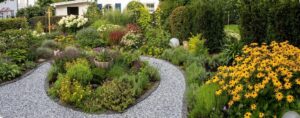

For Utah’s dry climate, the best garden designs shrink thirsty lawns, add stone paths and hardscape, and use simple, water‑wise plant palettes for northern Utah’s sun, soil, and seasons. Combine drought‑tolerant shrubs, grasses, and perennials like penstemon, Russian sage, and yarrow with grouped irrigation zones and mulch to create a low‑maintenance Utah garden design that saves water, looks polished, and thrives.
Utah’s hot, dry summers, clay-heavy soils, and cold winters make planning a garden a unique challenge. To balance the drastic temperature changes and dry climate, look for drought-resistant plants that work in Utah’s conditions.
Choosing the right plants for your Utah garden design will keep your landscape looking beautiful while conserving water. Use water-wise plants, reduce lawn size, add in stonework, and plant according to water needs, shade, and seasonality.
These four garden design ideas are tailored to northern Utah landscaping conditions so your yard can thrive through heat, drought, and snow.
Incorporate stonework and paths

Stonework and paths give structure to your yard and reduce the amount of high‑water lawn you need to maintain. In northern Utah landscaping, swapping some lawn for hardscape is one of the most effective upgrades you can make.
- Use pavers, concrete, or natural stone to create clear walkways from the driveway to the front door or from the patio to destinations in the yard.
- Edge these paths with gravel or decorative rock to define shapes and reduce mowing and trimming.
- Soften the hardscape with planting pockets filled with water‑wise shrubs and perennials such as Russian sage, gaillardia, penstemon, and sedum, all highlighted in Utah‑friendly plant lists.
Incorporating stonework paths keeps foot traffic off planting beds, simplifies maintenance, and complements modern Utah garden design.
Rethink the traditional lawn
Large, thirsty grass lawns are hard to justify in Utah’s dry climate and under local watering guidelines. Instead of removing turf completely, many Utah landscaping projects aim for smaller, more functional lawn areas surrounded by planting beds and hardscape.
- Keep grass where you use it, areas designated for kids, pets, or a small gathering space.
- Replace the rest with mulched beds, gravel seating areas, or a low‑water “meadow” of drought‑tolerant plants.
- Build the planting around climate‑adapted flowering perennials like coneflower, catmint, blanket flower, and ornamental grasses that handle sun, wind, and alkaline soil.

If you love more water‑needy flowers such as dahlias or lilies of the valley, tuck a few into shadier, well‑watered corners as accent plants. Let the Utah‑tough species do the heavy lifting so your yard still looks good in hot, dry stretches.
Organizations like Localscapes aim to help Utahns create more local, climate-friendly gardens and are a good resource for finding plants and garden layouts.
Embrace a desert‑inspired look
One of the best garden design ideas for Utah is to echo the look and feel of our own landscapes. A desert‑inspired Utah garden design uses warm‑toned stone, open space, and resilient plants to create a yard that feels natural and grounded. This type of landscape also aligns better with Utah’s Slow the Flow initiative, which aims to conserve water.
- Start with structure: boulders, gravel swales, dry streambeds, and raised mounds break up the space and improve drainage.
- Add plants that thrive in full sun and low water, such as yucca, hardy agave (where appropriate), smaller conifers, native or adapted grasses, and flowering perennials like gaillardia, penstemon, and Russian sage.
- Keep color in mind, silvery foliage, soft greens, and pops of yellow, orange, or purple mimic Utah’s foothills and red‑rock areas.
This style is ideal for front yards, corner lots, and park strips where irrigation is difficult and visual impact matters.
Keep plant life simple

For northern Utah landscaping, simple, water‑wise plant palettes often age better than crowded, over‑mixed beds and are much easier to maintain. Focusing on a smaller group of well‑adapted plants makes it easier to design, maintain, and water your yard effectively.
- Choose plants that match your sun, soil, and water conditions rather than forcing favorites to survive in the wrong spot.
- Group plants by water needs (hydrozones) so each area is irrigated appropriately without water waste.
- Aim for a mix of shrubs, ornamental grasses, and perennials that provide structure and seasonal interest. Some heat-loving options are yarrow, hummingbird mint, and black‑eyed Susan.
Then, layer in a few personal favorites for extra charm. This approach keeps your Utah garden design cohesive, water‑efficient, and easier to care for.
FAQ about Utah garden design
How do I start designing a garden in northern Utah?
Start by deciding how you want to use the space. Is it for play, relaxing, entertaining, or beauty? Then map those activities to areas for lawn, seating, and planting. After that, note sun and shade patterns, slopes, and existing trees so you can choose plants that match your microclimate.
What plants survive best in Utah’s dry summers?
The toughest plants for Utah’s dry summers are drought‑tolerant perennials like Russian sage, yarrow, catmint, penstemon, gaillardia, and many native grasses. They handle full sun, lean soils, and deep, infrequent watering better than traditional thirsty ornamentals.
How can I reduce water use without losing curb appeal?
You can reduce water use by shrinking your lawn, grouping plants by water needs, switching to drip irrigation, and using two to three inches of mulch in planting beds. Combining these steps with clear paths and defined beds keeps the yard looking intentional and polished.
Do I have to use only native plants for a Utah garden design?
You don’t need to only use native plants; choose plants adapted to your soil, water, and temperature conditions. Natives are a great foundation, but many adapted plants from similar climates also perform well in Utah.
Where should I put flower beds in my yard?
Place flower beds where you will see and enjoy them, along front walks, around patios, or framing views from windows. Use microclimates by placing tougher plants on the hotter south or west sides and more shade‑tolerant plants on the cooler north or east sides.
When is the best time to install a new garden in northern Utah?
The best time to install a new garden in northern Utah is spring or fall, when temperatures are moderate, and plants can root before extreme heat or cold. Many homeowners plan designs in winter and schedule installation as soon as soil conditions allow in spring.
Are there Utah programs that help pay for water‑wise landscaping?
Yes. Programs like Utah Water Savers and Localscapes Rewards may offer cash incentives when you replace grass with water‑wise landscaping and follow Utah‑friendly design standards.
Let LaytonScape help design your Utah garden
LaytonScape’s northern Utah landscaping team blends water‑wise principles with creative garden design ideas to build outdoor spaces that look good and work with Utah’s climate. Our experienced designers have helped homeowners create their dream yards while working within Utah’s unique conditions.
If you want to reduce lawn area, add stonework and flower beds, or completely reimagine your home’s landscaping, a professional plan from an experienced team will help bring it to life. We will work with you from plant selection to irrigation. Reach out to Laytonscape to schedule a consultation and start transforming your yard.