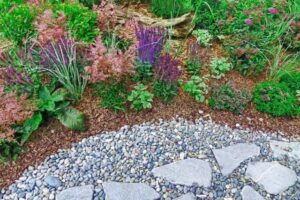

Using landscaping mulch correctly helps your plants thrive, reduces weeds, and gives your yard a beautiful appearance. When mulching a garden or protecting new mulch and grass seed areas, focus on material choices, applying the correct depth, and timing installation around Utah’s weather for the best results.
Landscaping mulch is one of the simplest ways to improve soil health, conserve water, and boost curb appeal in Utah landscapes. Many homeowners either skip mulch or spread it too thick, leading to stressed plants, pests, or bare spots in lawns where mulch and grass seed didn’t get paired correctly.
In this guide, you’ll learn practical tips for using mulch around beds, trees, and pathways, plus how to handle mulching a garden in Layton’s climate and when (and how) to mulch over grass seed without hurting germination.

What does mulch do in a garden?
Mulch is any material spread in a layer over soil to protect plant roots, conserve moisture, and improve the look and performance of your landscape beds.
Most residential yards use shredded bark, wood chips, compost, or stone, which act as a protective blanket that shields the soil from sun, wind, and pounding rain.
When mulching a garden, the blanket helps regulate soil temperature, slow down evaporation, and block sunlight from weed seeds, so they struggle to sprout. Organic mulch products also break down slowly, feeding the soil over time and creating a richer foundation for flowers, shrubs, and trees.
Research from the EPA shows that properly applied mulch significantly cuts evaporation, reduces watering frequency, suppresses weeds, and limits soil erosion — making it one of the highest-impact upgrades you can add to existing beds.

Step-by-step tips for using mulch
1. Clear and edge your beds
Remove weeds, old debris, and matted material before mulching a garden so the new layer sits cleanly on the soil. Create a defined edge along beds, walkways, and lawn areas to keep landscaping mulch contained and visually crisp.
2. Prep the soil first
Loosen compacted soil and add compost or amendments before spreading mulch in new gardens or problem areas. This ensures roots can grow into the soil instead of staying in the mulch layer.
3. Choose the right mulch
Use shredded bark or wood chips around trees and shrubs, and finer landscaping mulch or compost blends around annuals and perennials where you may replant often. In high-traffic paths, stone mulch may be useful, but be cautious about using rock when mulching a garden with shallow-rooted plants that dislike extra heat.
4. Apply the correct depth
Aim for about two to three inches of mulch over most beds; too little won’t suppress weeds, and too much can suffocate roots. Around tree trunks and woody stems, pull landscaping mulch back so it doesn’t pile up like a “volcano,” which invites rot and pests.
5. Water before and after mulching
Lightly water the soil before mulching a garden, then gently water once the mulch is in place to help it settle and retain moisture. This step is helpful in Utah’s dry periods, when quick evaporation is a concern.
6. Use mulch carefully with grass seed
When working with mulch and grass seed, prepare the seedbed, spread seed at the recommended rate, then add a thin layer of straw or other light mulch so about half the seed is still visible. It protects the seed from wind and birds while still allowing light and air through for healthy germination.
7. Adjust mulch for each season
For seasonal mulch maintenance, there are different steps to take. In spring, rake and fluff existing mulch, then top it up to the ideal depth after the soil has warmed a bit. In summer, check hot, exposed beds and add mulch where the soil dries out quickly. In fall, refresh coverage around perennials and shrubs before freezes, and in winter, avoid heavily mulching right up against crowns so plants don’t stay too wet.
Examples of mulch uses for Utah yards
Homeowners with south-facing flower beds struggle with dry, compacted soil and the need for constant hand-weeding. Adding 3 inches of dark bark landscaping mulch over amended soil reduces watering needs, keeps soil cooler, and makes weeds much easier to manage throughout the season.
If a newly seeded side yard is washing out in storms, prepare the soil, reseed, then use a light straw cover to hold seed in place and keep the surface damp between waterings, for thicker, more even turf coverage.
Benefits of mulching a garden
- Conserves soil moisture so plants require less frequent watering, a major advantage in Utah’s dry stretches.
- Suppresses weeds by blocking light from reaching weed seeds, which reduces time spent hand-weeding.
- Regulates soil temperature, keeping roots cooler in summer and more stable in shoulder seasons.
- Prevents soil erosion from wind and rain, especially on slopes or exposed beds.
- Improves soil structure over time as organic landscaping mulch breaks down and feeds beneficial organisms.
- Instantly upgrades curb appeal with clean lines and contrasting color around plants, walkways, and patios.
- Protects new turf when you combine mulch and grass seed in problem areas, helping seeds stay in place and retain moisture.

Mulch mistakes to avoid
- Piling mulch against tree trunks or shrub bases can lead to rot, insect infestations, and shallow rooting.
- Applying more than three to four inches of mulch so it suffocates roots and makes the soil too wet or too dry, depending on conditions.
- Using landscaping mulch as a substitute for soil improvement instead of pairing it with compost and proper planting practices.
- Choosing rock or rubber mulch around tender perennials that don’t tolerate extra heat buildup.
- Forgetting to adjust watering habits, mulched beds often need less frequent but deeper watering.
- Covering new lawns with a heavy layer of mulch with grass seed, which blocks light and slows germination.
Mulch research insights
- UC Master Gardeners (University of California) shared that applying mulch reduces evaporation by up to fifty percent (50%) and protects the soil from erosion while also suppressing weeds.
- In hot, drought-prone climates, mulching a garden is widely recommended because it conserves water, moderates soil temperatures, and reduces maintenance by reducing weed growth, according to West Virginia University.
Recommended mulch types and tools
Helpful mulch types for Utah gardens
- Shredded bark or wood chips for trees, shrubs, and long-term beds.
- Fine compost or soil conditioner for vegetable gardens and beds you replant often.
- Decorative rock or gravel for paths and high-traffic areas (used carefully near heat-sensitive plants).
Useful tools and accessories
- Wheelbarrow, mulch fork, and rake for moving and smoothing landscaping mulch.
- Hand trowel and pruning shears for bed prep and plant maintenance.
- Hose with a gentle spray nozzle to water a garden before and after mulching.
- Straw or a similar light cover when working with mulch and grass seed on new lawn sections.
Mulch FAQs
How thick should I spread mulch in my garden?
Most beds do best with two to three inches of mulch spread evenly over the soil surface. When mulching a garden, this depth is usually enough to conserve moisture and block weeds without cutting off air to plant roots.
Can I put mulch over grass seed?
Yes, but you should only use a light cover. When combining mulch and grass seed, apply a thin layer of straw or similar material so you can still see some seed; this protects it while allowing light and air through.
How often should I refresh my mulch?
Most homeowners refresh landscaping mulch once or twice a year, typically in spring and sometimes again in fall. Light raking and topping up keep color, depth, and weed control consistent as organic materials break down.
What type of mulch is best for Utah gardens?
In Utah, shredded bark and wood chips are popular because they insulate soil and handle sun exposure well. When mulching a garden with perennials and shrubs, these materials balance appearance, durability, and soil improvement.
Do I need landscape fabric under mulch?
Fabric can help in some high-weed or rock areas, but it’s not always necessary under landscaping mulch. In planting beds where you’ll be adding plants and improving soil, many pros prefer fabric-free layers so roots and soil life stay healthier.

Utah garden and lawn mulching
Northern Utah’s hot summers, dry air, and occasional heavy storms make mulching important. In Layton and nearby Davis County communities, landscaping mulch helps protect sloped yards from erosion and keeps plant roots cooler during long sunny stretches.
When mulching a garden here, it’s smart to time major applications for spring or fall, avoiding extremely hot days or big storm systems that could wash fresh material out of place.
For new lawns or patch repairs, pairing mulch and grass seed correctly reduces runoff from sudden showers and supports even, healthy turf establishment. Local teams like LaytonScape also understand which mulch colors and materials complement Utah home styles and native or drought-tolerant plant palettes.
Let LaytonScape help you mulch your garden
Used correctly, mulch turns ordinary beds and borders into healthier, easier-to-maintain planting spaces that look beautiful through every season.
Whether you’re refreshing existing beds, mulching a garden for the first time, or trying to balance mulch and grass seed during a lawn repair, the right depth, material, and timing make all the difference. If you’re ready to upgrade your yard, explore LaytonScape’s mulch, lawn, and garden design services, or contact LaytonScape to create your dream landscaping.