
By August, the flowerbed along your driveway looks tired. The petunias you planted in May look thin and straggly, the sprinklers run every other morning, and the clay soil has cracked along the edges. Meanwhile, the foothills above Layton and Ogden stay dotted with color with no sprinklers at all, relying only on melting snow and summer storms.
Those foothills hold the answer. Utah native plants grow in the same soil, heat, and freeze-thaw swings your yard faces every year. Here are northern Utah native plants for landscaping, along with tips for giving them a strong start.
Why choose native plants in northern Utah?
According to the USU Center for Water-Efficient Landscaping, Utah is home to more than 385 native woody plant species and more than 100 species of penstemon. That variety gives Wasatch Front homeowners options for sunny slopes, shady side yards, and everything in between.
- They fit local conditions. Native plants are adapted to local soils, moisture, temperatures, and pests, making them strong candidates for low-water landscaping.
- They need less water once established. Many plants evolved with dry summers, so they’re naturally drought-tolerant plants for Utah yards.
- They support wildlife. Native flowers and grasses provide nectar, pollen, and seeds for bees, butterflies, hummingbirds, and songbirds.
- They help hold soil in place. Yarrow and little bluestem help stabilize soil on slopes and along beds.
Native flowers for color
These native flowers handle Wasatch Front heat and cold while adding color from spring into late summer.
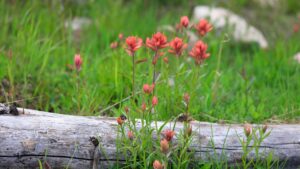
Firecracker penstemon
Firecracker penstemon (Penstemon eatonii) sends up arching stems of scarlet, tubular flowers that draw hummingbirds. USU Extension’s penstemon research rates it highly drought tolerant and cold hardy across the Intermountain West. It needs excellent drainage, since overwatering leads to root rot. Clip stalks after the final bloom to limit reseeding.
White yarrow
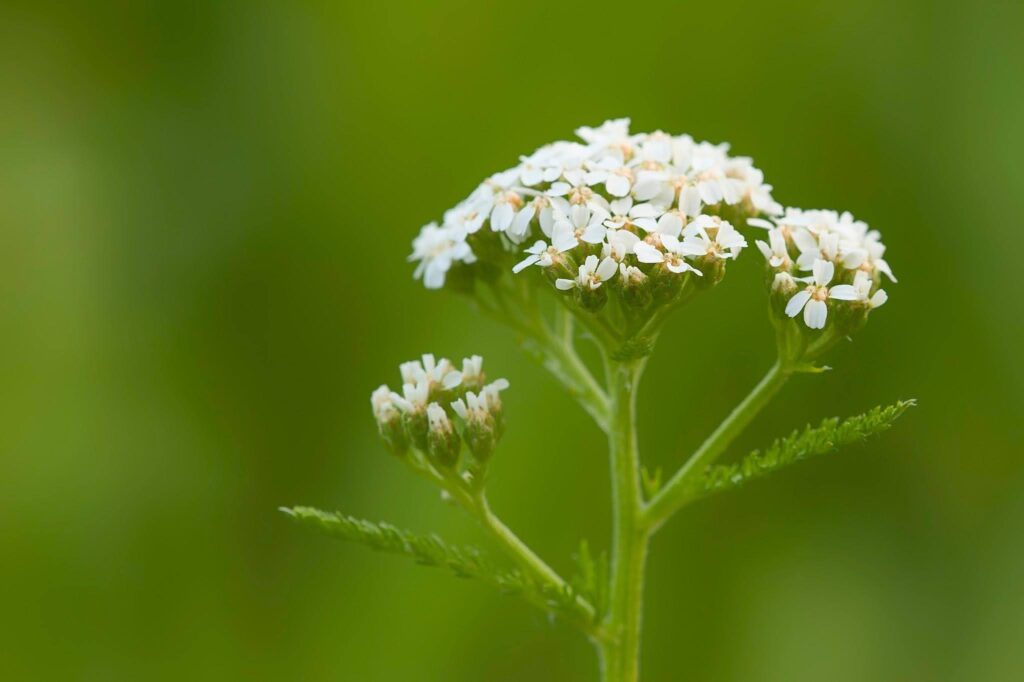
Western yarrow (Achillea millefolium) forms flat clusters of white flowers above lacy leaves. It grows wild in multiple northern counties, and clay is an acceptable soil type for it. Expect spring to early summer blooms on plants up to 3 feet tall. Yarrow spreads readily, so give it room.
Fragrant sand verbena
Fragrant sand verbena (Abronia fragrans) produces rounded, snowball-like clusters of sweet-scented white flowers. This Utah native has low water needs and grows about 2 feet tall and 3 feet wide. Plant it in full sun and sandy or gravelly soil.
Nodding onion (lady’s leek)
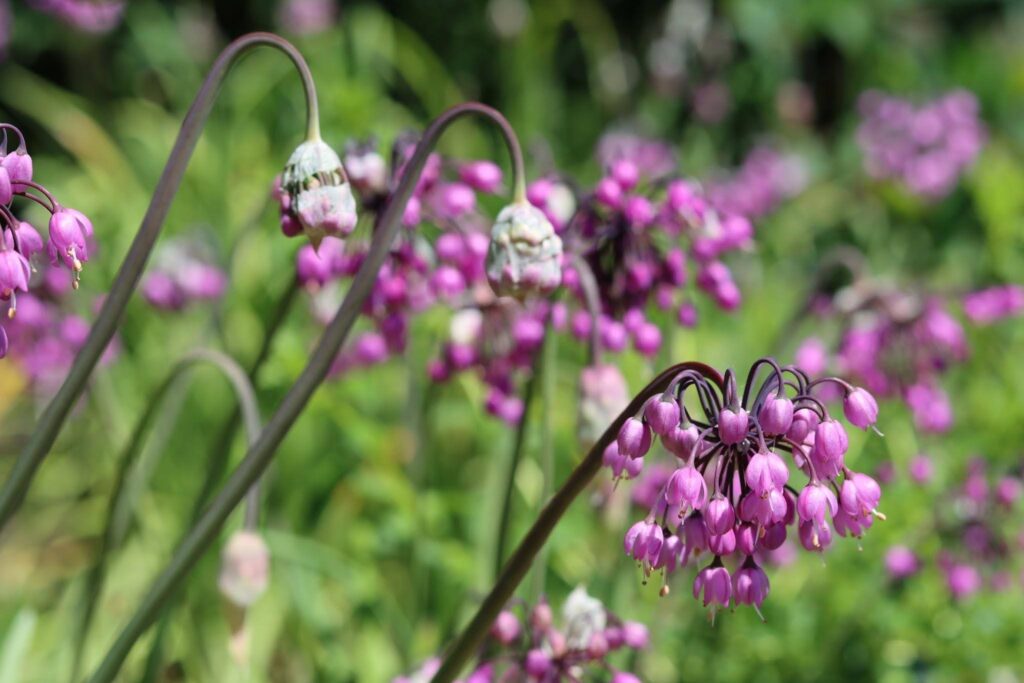
Nodding onion (Allium cernuum), also called lady’s leek, grows from a small bulb and carries drooping clusters of pink summer flowers that attract bees and butterflies. Tuck it among other perennials in full sun, where its thin, grass-like leaves can die back after blooming without leaving a bare spot.
Native grasses and groundcovers for texture
If flowers aren’t your thing, native grasses and groundcovers add texture and year-round structure.
Little bluestem
Little bluestem (Schizachyrium scoparium) is a warm-season bunchgrass with blue-green blades that turn bronze in fall. It reaches 3 to 4 feet tall, tolerates drought well, and is hardy to minus 38 degrees. Small birds feed on its seeds through winter. It doesn’t tolerate salty soil, so keep it away from driveway runoff where de-icing salt collects.
Creeping barberry
Creeping barberry (Berberis repens), sometimes sold as creeping Oregon grape, is a strong choice among Utah native plants for shade under mature trees, where many plants struggle. This evergreen groundcover handles full sun, partial shade, and heavy shade. It grows 6 to 24 inches tall, flowers yellow in spring, and turns red and purple in winter.
It’s also deer resistant, meaning deer tend to pass it over, a plus for homes near the foothills.
Native plants at a glance
| Plant | Sun | Water needs | Height | Best feature |
| Firecracker penstemon | Full sun to part shade | Low | 10 to 40 inches | Scarlet blooms for hummingbirds |
| Western yarrow | Full sun | Low | Up to 3 feet | Tolerates clay soil |
| Fragrant sand verbena | Full sun | Low | About 2 feet | Sweet-scented white flowers |
| Nodding onion | Full sun | Low | 1 to 2 feet | Pink summer flowers for pollinators |
| Little bluestem | Full sun | Low | 3 to 4 feet | Bronze fall and winter color |
| Creeping barberry | Full sun to heavy shade | Low | 6 to 24 inches | Evergreen, deer-resistant groundcover |
How to plant native plants in Wasatch Front soil
- Plan for clay. Much of the Wasatch Front sits on heavy clay that holds water. Penstemon, sand verbena, and little bluestem need good drainage, so plant them on gentle mounds or in beds loosened with compost and gravel.
- Group plants by water needs. Keep drought-tolerant natives on their own irrigation zone instead of mixing them with lawn. A sprinkler installation designed around plant groupings keeps natives from getting overwatered.
- Water often the first year, then taper off. New plantings need regular water through their first growing season. Watering restrictions change from year to year, so check your city or water district’s current guidelines.
- Choose the right mulch. Gravel suits penstemon and sand verbena, while shredded bark works around creeping barberry in shade. Learn more about mulch options for Utah beds.
Frequently asked questions
What are some native perennials that grow well in Utah?
Beyond the plants above, mountain beebalm and prince’s plume are two more native perennials to consider. Mountain beebalm forms low mounds of lavender to rose-purple flowers that draw bees and butterflies. Prince’s plume withstands extreme drought and sends up lemon-yellow flower spikes up to 5 feet tall in summer.
What native trees and shrubs grow in Utah?
Bigtooth maple, curl-leaf mountain mahogany, buffaloberry, and single-leaf ash are Utah natives that work in home landscapes. Bigtooth maple adds bright fall color as a small tree, while curl-leaf mountain mahogany grows as a large shrub or small tree suited to low-water yards. Buffaloberry and single-leaf ash also come from Utah’s drier, lower-elevation habitats.
Can you plant Utah native plants in fall?
Yes. Early fall and spring are good times to plant, when mild temperatures help roots settle in before summer heat or winter freezes. Avoid planting in the July and August heat.
Is lavender native to Utah?
No. Lavender is native to the Mediterranean region of southern Europe, according to the Conservation Garden Park lavender profile. It still grows well in many Utah yards because it tolerates drought.
Plan your native plant garden with LaytonScape
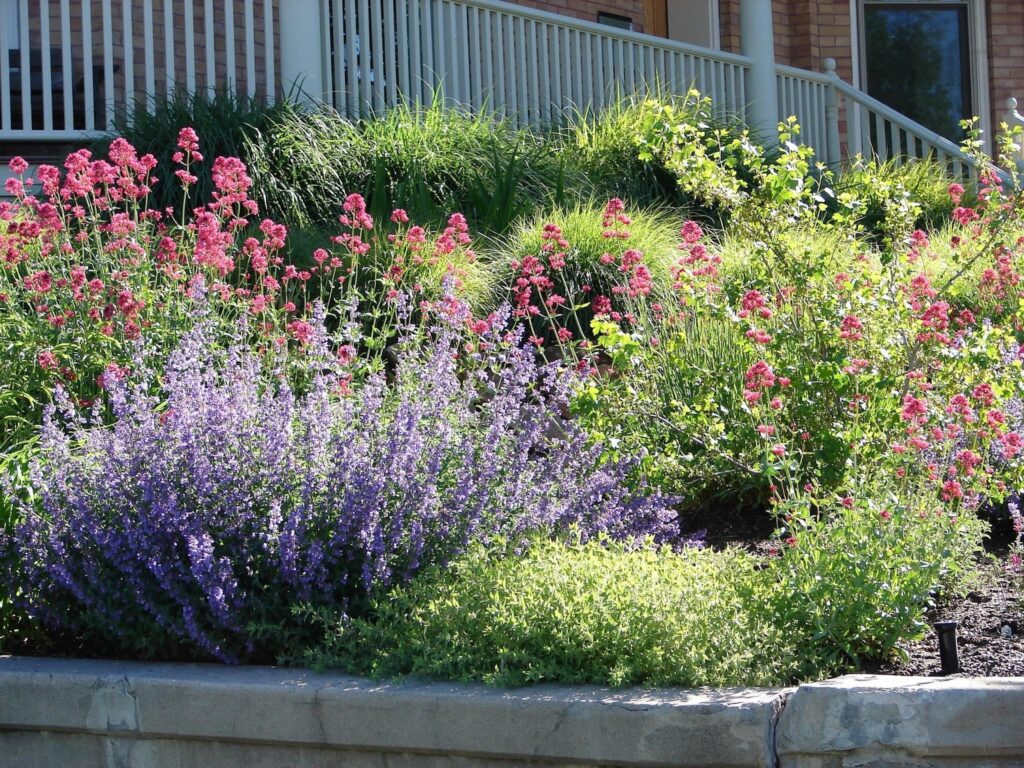
Native plants give your yard color, texture, and habitat while asking for less water than a traditional flowerbed. The right mix depends on how much sun your yard gets and what kind of soil you have.
LaytonScape offers comprehensive garden design and landscape installation for your unique landscape. With decades of experience on the Wasatch Front, our team will help you choose native plants, plan irrigation around them, and install beds built for northern Utah clay and climate.
Enjoy a yard full of blooms with plants that thrive in Utah’s climate. Contact LaytonScape today to schedule a free consultation.