

To choose the right evergreen, match the tree to your site’s sun, wind exposure, soil, drainage, and available watering. For many Utah landscaping projects, the most reliable approach is to select evergreen trees based on mature size, cold tolerance, and maintenance needs. This guide explains how to select the best Utah trees for privacy, curb appeal, and year-round structure in Utah.
The evergreen decision that shapes your landscape for years
Evergreen trees do a lot of heavy lifting in a landscape. They block wind, create privacy, add winter color, and give your yard structure when everything else looks dormant. However, Utah’s dry air, intense winters, and temperature swings harm the wrong tree, especially in exposed front yards and newer neighborhoods with compacted soil.
In this guide, you’ll learn a clear process for choosing a tree that fits your space and thrives long-term. If you’re planning Utah landscaping for a new build or upgrading an older yard, or even looking for the best Utah trees, you’ll also receive practical care tips that help evergreens establish more quickly and look their best year-round.
What you should know before choosing evergreens
“Evergreen” simply means the plant keeps foliage year-round, but that doesn’t guarantee it will look great year-round. In Utah, success often comes down to moisture management and placement.
Winter sun and wind will dry evergreen needles and scales when the ground is frozen, and the tree can’t replace lost moisture fast enough. That’s one reason you’ll sometimes see browning in late winter or early spring, especially on exposed sides of the tree.
Begin by clarifying your goal. Do you want a living privacy wall, a single statement tree, a windbreak, or a foundation planting that won’t outgrow the house? Your answer affects spacing, mature size, maintenance, and cost.
The “right tree, right place” choice usually looks better and costs less over the life of the landscape than a fast fix that needs frequent pruning or replacement.

How to choose the right evergreen for Utah
1. Start with your goal
Every Utah landscaping project should begin with a specific plan. Privacy screens and windbreaks call for different shapes than focal-point trees. Decide whether you need height, width, or both, and how quickly you want coverage.
2. Measure your real planting space
Account for mature width, not nursery size. Check setbacks from fences, sidewalks, driveways, and foundations, and look for overhead utilities.
3. Map sun and wind exposure
Note where the afternoon sun hits hardest in summer and where winter wind funnels through the yard. Many evergreens brown on the side facing the prevailing wind or reflected sun from pavement and windows.
4. Check soil and drainage before you buy
Dig a small test hole, fill it with water, and see how quickly it drains. If water sits for hours, you may need soil improvements, a different tree, or a different location.
5. Match the tree to where you live
Understand what a winter in your neighborhood is typically like — how much snow, wind, and sun you get each year. Then, factor in your own yard and how its shape and placement may affect any trees. Open, windy corners, shaded north sides, and areas next to pavement or rock often feel significantly colder or hotter than the rest of the property.
When you keep those small differences in mind, it’s much easier to choose a tree that will handle Utah winters and look good year-round.
6. Decide what maintenance you’re willing to do
Some trees tolerate pruning better than others. If you don’t want to shear or shape a screen annually, choose a plant with a mature size that truly fits the space.
7. Choose the right size at purchase
Smaller trees often establish faster because their roots recover more quickly after transplant. Larger trees offer an immediate impact, but they typically require more attentive watering and may take longer to establish themselves.
8. Plan watering and establishment care
Even tough, drought-tolerant evergreens still need steady watering while they settle in. Most trees don’t fully “take off” in a single season, so give them extra attention for more than one growing season until their roots establish, and they can handle Utah’s weather on their own.
9. Confirm spacing for screens and windbreaks
Plan for airflow and mature width. Overcrowding leads to weak branching, uneven growth, and increased stress.
10. Pick a smart planting window
Aim for seasons that favor root growth and reduce heat stress. Planting at the right time gives evergreen trees in Utah a better chance to establish roots before the summer heat or winter freezes.
Benefits of choosing the right evergreen for Utah
Choosing the right evergreen is one of the simplest ways to give a yard a finished look in every season. The right tree improves privacy, reduces wind exposure, adds winter structure, supports curb appeal, and reduces replacement costs by establishing successfully. When you match species and placement well, evergreen trees for Utah also tend to show fewer stress symptoms, like browning, sparse growth, and dieback.

Common mistakes to avoid
Most of the problems you’ll face with an evergreen tree trace back to a few avoidable issues. Homeowners often choose trees based solely on their fast growth, plant them too close to fences or foundations, or skip drainage checks and plant them in problem soil. Another common mistake is inconsistent watering during the first few seasons, followed by overwatering later.
There can also be problems with the mulch. Piling mulch against the trunk traps moisture where it shouldn’t be and damages the bark. Finally, avoid heavy pruning early in the process. Young trees need time to establish structure before you ask them to stay small.
Quick facts to help you choose with confidence
- Hardiness zones are temperature-based. The USDA Plant Hardiness Zone Map uses average annual extreme minimum winter temperatures, which helps you compare cold tolerance across tree options.
- Establishment takes time. Trees establish themselves over multiple growing seasons, and larger trees may take longer to develop than smaller ones.
- Winter browning is often a result of moisture loss, not disease. Winter burn occurs whenever evergreens lose moisture during cold, sunny, windy weather, especially when the soil is frozen.
- Water-wise still includes trees. USU’s water-wise list focuses on plants adapted to Utah’s arid climate and cold winters. After trees establish, you should water many of them about every two weeks.
Tools that make planting and care easier
A few basics make evergreen selection and care much easier. Use a soil probe or long screwdriver to check moisture depth before watering. Mulch, applied correctly, helps moderate soil temperature and retain moisture around the root zone. Root-zone watering tools, such as a drip ring or a slow, deep watering approach, encourage the growth of deeper roots.
For wind-exposed sites, trunk protection helps young trees, and anti-desiccant sprays may be useful in specific situations, although extension guidance notes mixed results depending on the conditions.
FAQs
How do I know which evergreen will grow best on my property?
Start with your site: measure available space, note sun and winter wind exposure, and test drainage. Then match the tree’s mature size and cold tolerance to your microclimate. Plan for establishment watering, because even tough evergreens need consistent moisture while roots expand.
When is the best time to plant evergreen trees in Utah?
Many homeowners get the best results when they plant during milder seasons, which reduces heat stress and supports root growth. Avoid planting right before extreme weather. The goal is to give roots time to establish before summer heat or winter desiccation conditions arrive.
How much should I water a newly planted evergreen?
New evergreens need steady, consistent watering at the root zone while they establish. Some extension guidance recommends frequent watering immediately after planting, then gradually spacing it out as the roots expand, adjusting the watering schedule based on soil moisture and weather conditions rather than a fixed calendar.
How far from my house should I plant an evergreen?
Use the tree’s mature width to plan spacing. Plant far enough away to prevent branches from rubbing siding, blocking walkways, or crowding rooflines. Good spacing also supports airflow, which reduces stress and makes maintenance easier as the tree matures.
How do I prevent winter burn on evergreens?
Water frequently when entering winter, especially during dry periods, and reduce exposure to wind and reflected sunlight when possible. Winter burn often comes from moisture loss during cold, sunny, windy weather, particularly when the soil is frozen, and roots can’t replace that moisture.
What Utah’s climate means for your tree choice
Utah’s growing conditions change dramatically within short distances, which is why smart Utah landscaping starts with what’s happening in your specific yard. Neighborhoods along the Wasatch Front may share the same general climate, but wind exposure, soil disturbance from construction, and heat reflected from hardscapes create very different microclimates from property to property.
If you’re planting near streets, sidewalks, or park strips, space and irrigation coverage tend to be tighter, which influences what trees will thrive in the long term.
If you want a more water-wise approach, start with plants that handle Utah’s arid climate and cold winters, then design irrigation around establishment needs rather than peak-summer lawn schedules.
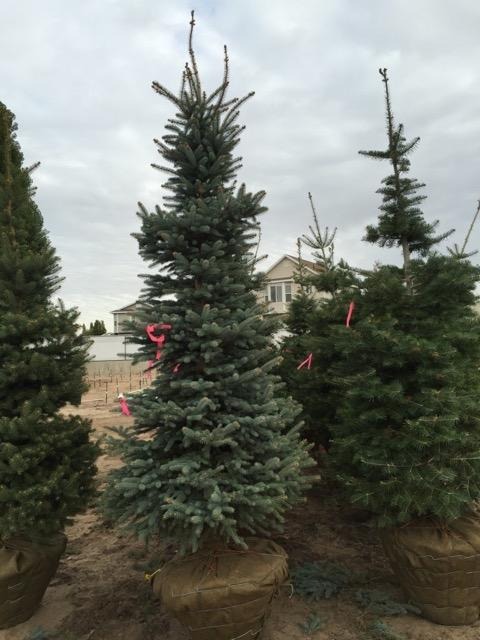
Choose evergreens with LaytonScape’s local know-how
The best evergreen choice comes down to what actually works in your yard. Space, soil, drainage, sun, and wind all play a role, and getting those details right from the start helps you avoid winter burn, weak growth, and the need for constant pruning later. With the right plan, evergreen trees for Utah provide privacy, year-round structure, and lasting curb appeal.
If you want help narrowing down the best Utah trees for your property and building a planting plan that fits your layout and irrigation, LaytonScape is here to help. Contact LaytonScape to discuss your goals, get expert recommendations, and schedule an installation that sets your trees up for long-term success.